ISO-Certified Data Wiping in iPhone Buyback Programs: The Step That Decides Whether Trade-In Stock Is Sellable
Every device that flows into a buyback or trade-in program arrives with a history: the previous owner's accounts, messages, photos, payment credentials, and often corporate profiles. For consumers, that history is a privacy concern. For a business that intends to remarket those devices, it is a hard commercial gate — a returned iPhone whose data has not been verifiably erased is not sellable inventory, no matter how good its cosmetic condition or battery health.
This article looks at the one step in the buyback chain that decides whether trade-in stock becomes remarketable inventory or a liability: certified, ISO-grade data erasure — what it actually involves, why a factory reset is not the same thing, and where it sits inside a professionally run white-label buyback program.
By TR Admin · Last updated: 2026-07-11
Why Trade-In Devices Are Different From Regular Wholesale Stock
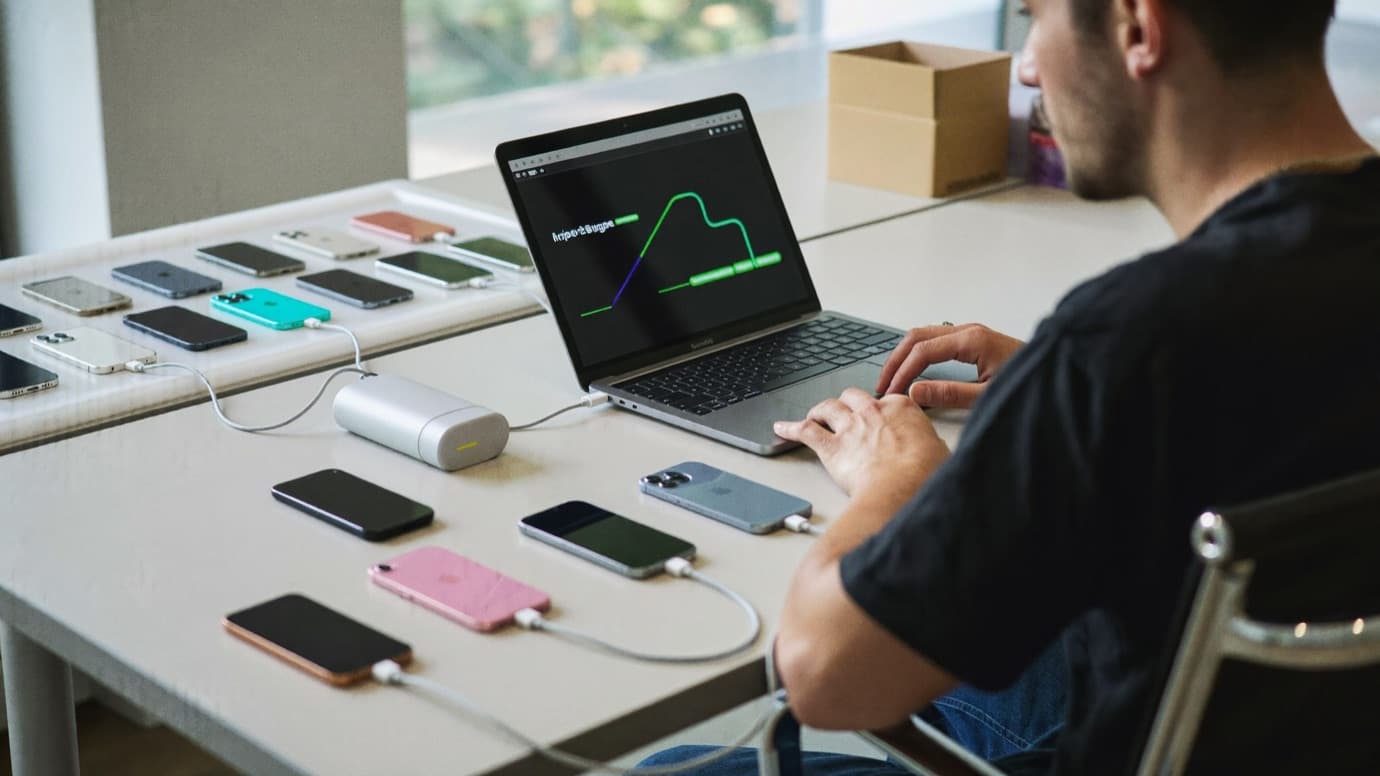
Standard wholesale lots typically pass through several professional hands before they reach a buyer, and reputable suppliers wipe and verify them at intake. Trade-in and buyback devices are different: they come straight from end customers. That means live iCloud sessions, saved payment cards, two-factor tokens, health data, and — with corporate trade-ins — MDM enrollment and company data. The party remarketing those devices carries the responsibility of making sure none of it survives the transition to the next owner.
There are two independent locks on a trade-in iPhone, and both must be cleared before resale. The first is the iCloud Activation Lock (Find My iPhone): as long as it is active, the device is bound to the previous owner's Apple ID and cannot be activated by anyone else — it is commercially dead stock. The second is the data itself, which persists through casual handling and simple resets in recoverable forms. A professional buyback intake verifies both per IMEI: activation-lock status against Apple's activation databases, and data erasure through a certified wiping process with a documented result. The background on how the lock works — and how it is checked — is in our activation lock guide.
- Trade-in devices arrive directly from end users — with live accounts, payment data and personal files
- Corporate trade-ins add MDM enrollment and company data to the risk surface
- Activation Lock (FMI) and residual data are two separate gates — both verified per IMEI
What ISO-Grade Erasure Actually Means — and Why a Factory Reset Is Not It
A factory reset deletes the user's visible environment, but it produces no evidence. There is no audit trail, no verification pass, and no per-device certificate — nothing a B2B buyer, an auditor, or a data-protection officer can review a year later. Certified erasure works differently: specialized software executes a defined erasure standard, runs a verification pass afterwards, and issues a tamper-evident, per-device erasure record tied to the IMEI. The difference is not cosmetic — it is the difference between claiming a device is clean and being able to prove it.
At TR Vertriebs GmbH, certified data wiping is the first stage of the four-stage quality pipeline — executed before any diagnostic or grading step, using the same certified toolset, including Blancco, that powers our 52-point diagnostic. Every unit ships with an individual test report, and data-wiping certificates are available on request. The sequencing matters: wiping comes first so that no technician works on a device that still carries a previous owner's data, and every downstream test result documents the post-erasure state of the unit. The regulatory background is covered in our data wiping & GDPR guide.
- Factory reset: no audit trail, no verification, no certificate
- Certified erasure: defined standard + verification pass + per-device record tied to the IMEI
- At TR: wiping is stage 1 of the QM pipeline — before diagnostics and grading, with Blancco in the toolset
Where Erasure Sits Inside a White-Label Buyback Program
In our white-label buyback and trade-in remarketing program, partners in the EU — and in part the US — run device take-back under their own brand while the operational chain runs through our warehouse. The flow is deliberately simple: TR provides daily purchase pricing, the partner collects devices from their end customers, the devices ship to Horn-Bad Meinberg, and every unit then passes certified ISO erasure, the full 52-point functional and cosmetic diagnostic, and grading before it is remarketed. The commercial side of the program — pricing, coverage, settlement — is described on our B2B buyback program page.
For the partner, the erasure step is what makes the whole model viable. Their customer relationship stays theirs, but the data responsibility is handled by a documented, certificate-backed process — which is precisely what corporate sellers and procurement departments ask about first when they consider handing over used fleets. Buyback is one of several sourcing channels our stock draws from, and every channel converges on the same intake standard: no device reaches grading, let alone a stock list, without a verified erasure result.
What B2B Buyers and Buyback Partners Should Require
Whether you are buying graded stock or considering a trade-in partnership, the requirements are the same: a named erasure toolset, erasure executed before further processing, verification per device rather than per batch, documentation available on request, and IMEI-level checks for activation lock and blacklist status. A supplier who can answer these points in writing removes both the compliance question and the commercial one.
TR Vertriebs GmbH has run its wholesale operation on this standard since 2011: certified ISO data wiping with Blancco in the toolset, a 52-point diagnostic with an individual test report per unit, IMEI verification against blacklist and activation-lock databases, three transparent grades with battery health guaranteed above 80% on every grade, and a full 30-day warranty on every unit. Stock spans iPhone 11 through the current iPhone 17 Pro Max, from a minimum order of 10 units — with same-day dispatch on payment by 5 PM CET and fully insured, typically next-business-day EU delivery.
- Named toolset and erasure standard — not just "data deleted"
- Erasure before processing; verification and record per device (IMEI-bound)
- Erasure documentation available on request
- IMEI-level activation-lock and blacklist verification
- Full 30-day warranty on every unit; battery health above 80% on every grade
- MOQ 10 units; iPhone 11 through the current iPhone 17 Pro Max
Frequently Asked Questions
Is a factory reset enough before reselling a used iPhone?
For professional remarketing, no. A factory reset removes the visible user environment but produces no verification and no evidence. Certified erasure executes a defined standard, verifies the result, and issues a per-device record tied to the IMEI — which is what corporate sellers, buyers and auditors ask to see.
Do I get proof that devices from a buyback program were wiped?
Yes. Every unit passes certified ISO erasure as the first stage of our quality pipeline and ships with an individual test report; data-wiping certificates are available on request. See our data wiping & GDPR guide for how the process works.
What happens if a trade-in device arrives with iCloud Activation Lock enabled?
It cannot be remarketed. Activation-lock status (Find My iPhone) is verified per IMEI at intake — locked devices are excluded from graded stock entirely and handled with the buyback partner, because only the previous owner can release the lock.
How does the white-label buyback program work?
TR provides daily purchase pricing, the partner collects devices from end customers under their own brand, devices ship to our German warehouse, and each unit passes certified ISO erasure, the 52-point diagnostic and grading before remarketing. Details on our B2B buyback program page.